





Loading...
GIMOTA data connectors suitable for railway applications
Designed for exceptional reliability and fault tolerance
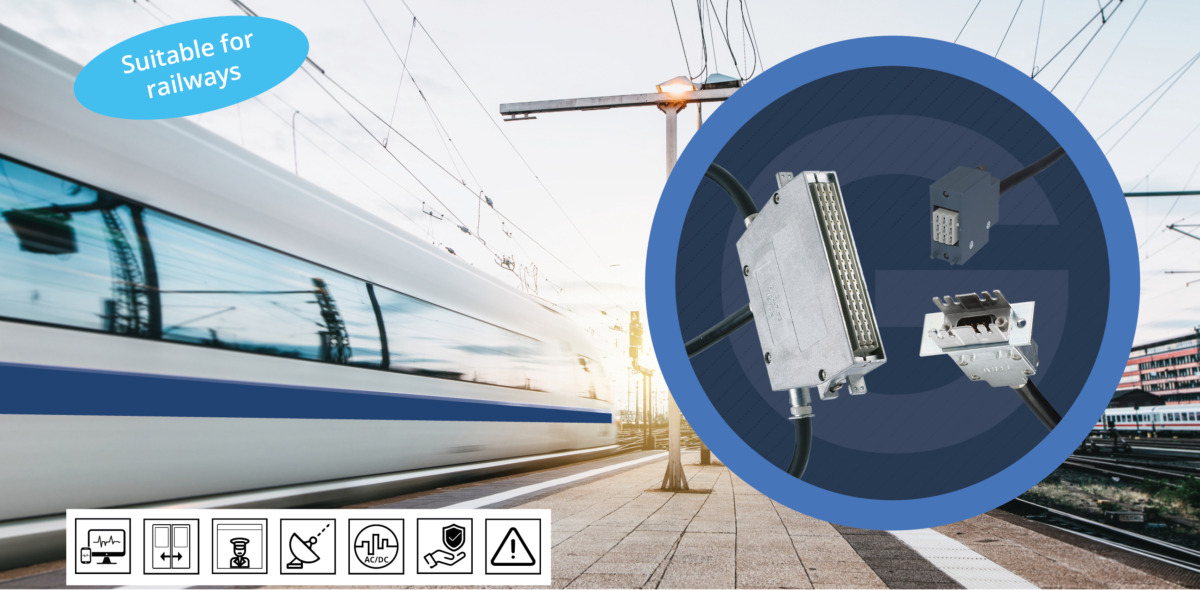
D-Sub, short for “D-Subminiature,” is a widely used connector system found in applications such as computer systems and data processing. D-Sub connectors are also widely used in the railroad industry. When higher currents or greater ruggedness are required, the DIN 41612 connector—also known as the DIN F connector—comes into play. Gimota adapted these well-known industrial connectors to the needs of the railway industry 40 years ago. GIMOTA TRACTM connectors were developed specifically for use in monitoring and control systems and demonstrate their high and reliable performance every day in rail vehicles operating worldwide.
GIMOTA TRACTM D-SUB and DIN-F data connector housings are made of a robust die-cast zinc alloy. This ensures sustainable EMC conductivity even at high EMC currents. The 360° EMC shielding is achieved through a hexagonal crimp on the cable holder. The cable holder also features an integrated cable strain relief, likewise achieved via a crimp.
They are suitable for indoor use (IP44 according to IEC 60529) and are highly resistant to shocks and vibrations. They also feature a unique coding system to prevent incorrect connections during the coupling process.
 |
 |
|
|
|
GIMOTA EMC Connector with Shield Sleeve
The GIMOTA EMC connector with shield sleeve guarantees reliable 360° shield contact in the smallest of spaces. The shielding concept using a shielding sleeve ensures high process reliability, as the components and crimping tools used are precisely defined in relation to one another and remain consistent.

Low contact resistance
Direct contact between the braid and the adapter results in extremely low contact resistance.
Maximum discharge currents
Sustained high contact pressure provided by the crimped shield sleeve enables maximum discharge currents, which are limited only by the shield cross-section.
Vibration resistance
The defined crimping of the shield sleeve, using the appropriate crimping tool from Gimota, ensures the highest level of vibration resistance.
GIMOTA D-SUB Coding
Coding is required to distinguish between multiple connectors installed side by side; therefore, GIMOTA TRAC connectors are codable. This is achieved by removing coding cams from the housing and installing corresponding coding tabs in the coding plate.
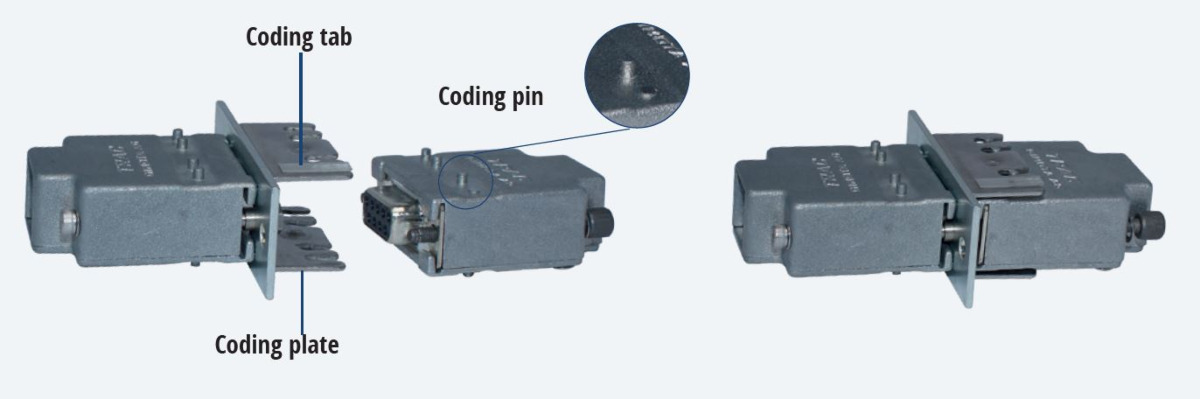
No Risk of Incorrect Connection
The coding prevents connectors arranged side by side from being connected incorrectly.
High Flexibility
TRAC connectors can be coded on-site; more than 24 variants are possible.
GIMOTA TRAC D-Sub
GIMOTA TRACTM D-SUB connector housings are made of a robust die-cast zinc alloy. They stand out for their compact design and are extremely space-saving. They are available with a crimp flange system or a flexible cable clamp for individual conductors. The housings are available in sizes 1 (9-pin) / 2 (15-pin) / 3 (25-pin) for up to 3 cable exits.

Optimal shielding contact
Crimping the cable shield ensures excellent shield contact and guarantees low transfer impedances.
Reliable strain relief
The strain relief crimping directly onto the cable jacket ensures optimal and long-lasting cable strain relief.
GIMOTA TRAC Bus Enclosure
GIMOTA TRACTM Bus connector housings are made of a robust die-cast zinc alloy. They feature a compact design and have two cable exits. They are also available with EMC shielding and cable strain relief in size 1 and are ideally suited for bus and special applications.

Ideal for bus applications
Through the input/output modules (DI, DX, AX) connected to the MITRAC bus couplers, analog signals (e.g., operator console inputs) are digitized and input into the MITRAC module, and digital signals are also output in the opposite direction.
GIMOTA TRAC DIN 41612 F
GIMOTA TRACTM DIN 41612 F connector housings are made of a robust die-cast zinc alloy. They stand out for their rugged construction. The covers feature 6 cable exits and are available with a crimp flange system or a flexible cable clamp for individual conductors. Depending on the connector housing, a distinction is made between DIN Power and DIN Signal

DIN Power FKEH15
The DIN Power connector is primarily used in applications where the connector requires exceptional ruggedness or higher currents up to 15 A. The DIN Power has 15 power contacts.

DIN Signal FKEF48
The DIN Signal connector is characterized by a consistent 2.54 mm pitch. This ensures both a relatively high contact density and the necessary robustness. The DIN Signal connector has 48 signal contacts.

DIN Mix FKEF31
The DIN Mix connector FKEF31 combines the advantages of the DIN Power and DIN Signal connectors in a single connector housing. The DIN Mix connector has 7 power contacts and 24 signal contacts.

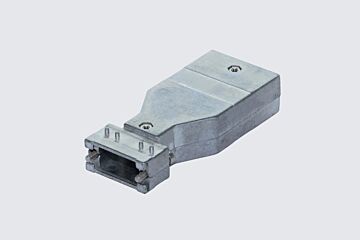
Plug cover set TRACBK
Sub-D buscoupler with 2 straight cable entries, metric thread, size 1
Article Number : TRACBKST1-6
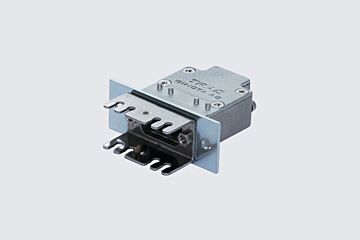
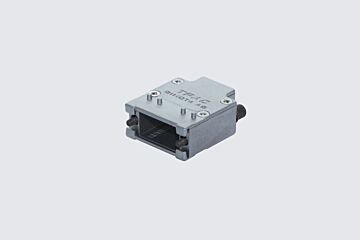
Plug cover set TRACST
Sub-D plug with straight cable entry, metric thread, size 1
Article Number : TRACST1-2
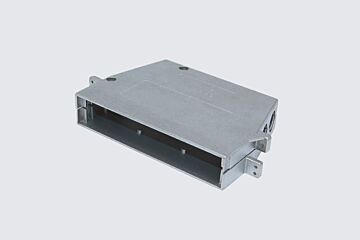
Plug cover set TRACST
Sub-D plug with straight cable entry, UNC thread, size 1
Article Number : TRACST1-4

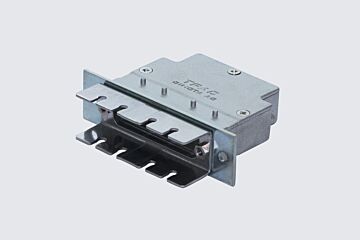
Receptacle set TRACDO
Sub-D receptacle with 2 straight cable entries, size 3
Article Number : TRACDO3

Plug cover set TRACST
Sub-D plug with straight cable entry, metric thread, size 2
Article Number : TRACST2-2
Plug cover set TRACST
Sub-D plug with straight cable entry, UNC thread, size 2
Article Number : TRACST2-4
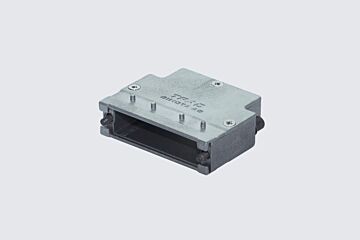
Plug cover set TRACST
Sub-D plug with 2 straight cable entries, metric thread, size 3
Article Number : TRACST3-2
Plug cover set TRACST
Sub-D plug with 2 straight cable entries, metric thread, size 3
Article Number : TRACST3-4
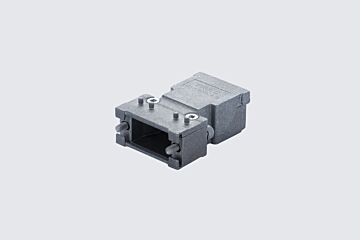
Plug cover set TRAC2ST
Sub-D plug with 2 straight cable entries, metric thread, size 1
Article Number : TRAC2ST1-8
Plug cover set TRAC2ST
Sub-D plug with 2 straight cable entries, UNC thread, size 1
Article Number : TRAC2ST1-9

Plug cover set TRAC2ST
Sub-D plug with 2 straight cable entries, metric thread, size 2
Article Number : TRAC2ST2-8
Plug cover set TRAC2ST
Sub-D plug with 2 straight cable entries, UNC thread, size 2
Article Number : TRAC2ST2-9
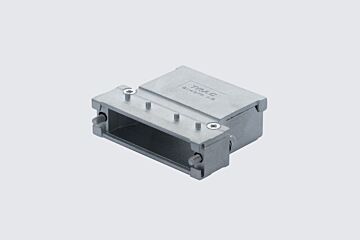
Plug cover set TRAC3ST
Sub-D plug with up to 4 straight cable entries, metric thread, size 2
Article Number : TRAC3ST3-8
Plug cover set TRAC3ST
Sub-D plug with up to 4 straight cable entries, UNC thread, size 3
Article Number : TRAC3ST3-9
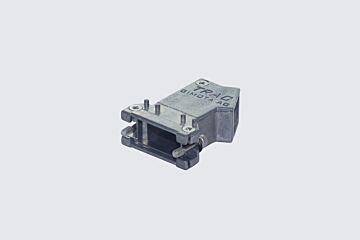
Plug cover set TRAC60ST
Sub-D connector with 60 ° degree cable entry, size 1
Article Number : TRAC60ST1-5
Plug cover set TRAC60ST
Sub-D connector with 60 ° degree cable entry, size 1
Article Number : TRAC60ST1-7
Loading...
| Cookie Name | Cookie Provider | Cookie Description | Cookie Type |
|---|---|---|---|