





 10.07.2026
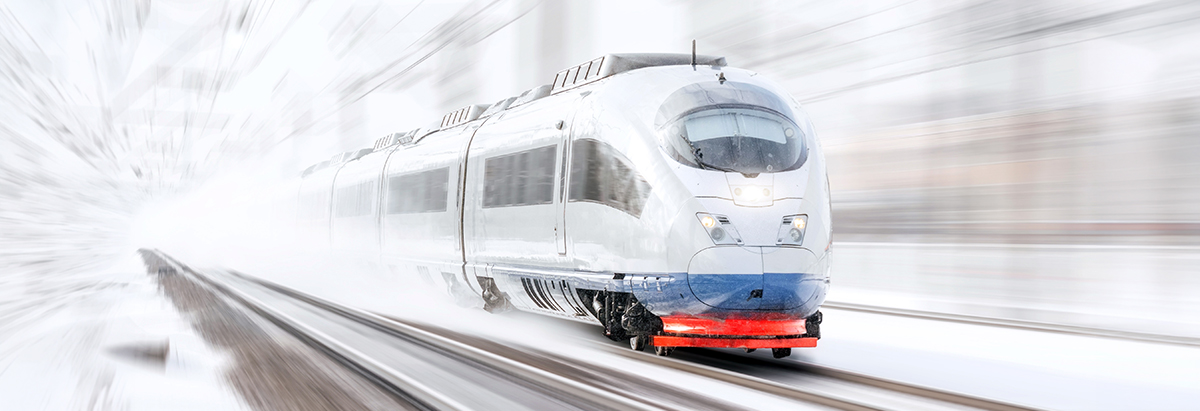
In railway technology, connectors must do much more than simply establish electrical contacts. They transmit power, signals, or data while being exposed to vibrations, moisture, dirt, temperature fluctuations, EMC influences, and often very confined installation spaces.
Standard connectors are therefore not always sufficient—especially when high currents, unusual numbers of contacts, special cable exits, sealing requirements, or extreme environmental conditions come into play.
This is exactly where custom connector solutions : They are tailored to the specific application, installation situation, assembly, and operating environment.
Why Standard Connectors Are Often Insufficient in Rail Technology
Not every application in rail transport can be solved with a standard connector or catalog product. In many projects, requirements arise that necessitate a custom connection solution.
| Challenge | Why standard solutions often fall short | Possible Custom Solution |
|---|---|---|
| High currents | Standard connectors do not support the current load | Customized contacts and housings |
| Unusual number of contacts | Standard pin configurations do not suit the application | Custom contact arrangement |
| Limited installation space | Connectors or cable exits cannot be installed | Special end housings or cable exits |
| Water and contamination | Intrusion can cause short circuits | Sealing concepts, potting, longitudinally sealed solutions |
| EMC requirements | Inadequate shielding can cause interference | Conductive surfaces, 360° shielding connection |
| Extreme environments | Sand, ice, vibration, or heat place a strain on the system | Fully rubber-coated or particularly robust designs |
| Retrofit projects | Existing installation is to be retained | Custom solutions for existing cable protection systems |
The most important point: A good connector solution must not only function electrically; it must also be suited to the actual installation environment.
Practical Example 1: Berlin S-Bahn — Reliable Connection Despite Water and Tight Installation Space
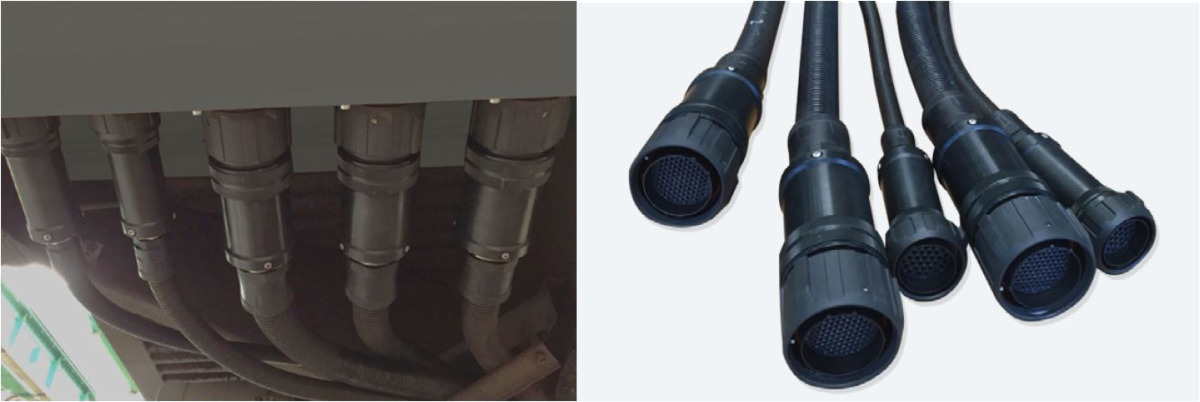
Recurring short circuits between the railcars put the Berlin S-Bahn Class 480 through a tough test. On-site troubleshooting revealed the weak point: an outdated connector solution from a third-party manufacturer in the cable junction box was unable to adequately withstand either water or dirt. The moisture that seeped in ultimately caused catastrophic short circuits.
The challenge
- Replace the existing connector with a higher-quality solution
- Reuse the existing system wiring as much as possible
- Maintain existing cable protection
- Prevent water ingress
- Longitudinal sealing of the plug connections to prevent condensation from forming
- Implement the solution despite limited installation space
A standard solution was not suitable for this.
The solution
GIMOTA developed a custom sliding backshell. This could be slid back over the existing cable protection solution, thereby creating the necessary space for the rewiring.
In addition, the connector sockets were equipped with a EN 45545-2 . This provided additional protection against water and contamination.
The Benefits
| Problem | GIMOTA Solution | Result |
|---|---|---|
| Water penetrated the connectors | Encapsulation with certified sealant | Improved sealing |
| Limited space in the cable junction box | Sliding Backshell | Installation despite limited installation space |
| Existing installation should remain in place | Adaptation to cable protection system | Minimal impact on existing infrastructure |
| Power outages caused by short circuits | Robust plug connection | Greater operational reliability |
This example illustrates that custom connectors are particularly valuable when technical requirements and existing vehicle architecture must be considered together.
Case Study 2: Mecca–Medina — Fully rubber-sealed connectors for desert conditions
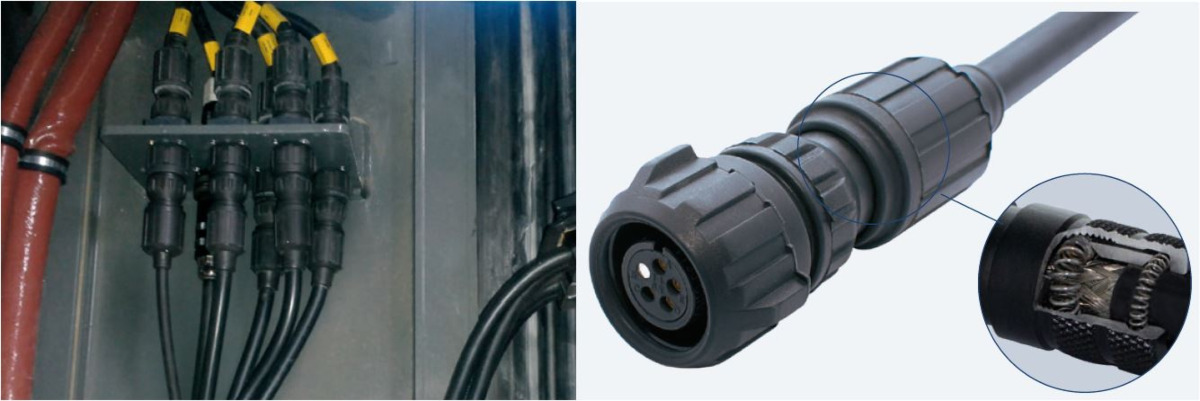
A high-speed train traveling through desert regions places special demands on connector technology. In the Mecca–Medina Talgo 350 project , connectors mounted underneath the train were exposed to heavy sand blow.
At high speeds, the sand acts like continuous sandblasting. Without additional protection, the outer casing of the connectors can be damaged over time.
The Challenge
- Extreme sand exposure beneath the vehicle
- abrasive effect on the connector housing
- Reliable operation in heat, dust, and harsh environments
- Long-lasting protection without complicated installation
The Solution
GIMOTA equipped proven sensor connectors with a special rubber coating. This fully rubberized design cushions the impact of sand particles and provides lasting protection for the connectors’ outer housing.
The Benefits
| Problem | GIMOTA Solution | Result |
|---|---|---|
| Sandblasted effect under tension | Special rubber coating | Protection of the outer shell |
| Extreme environmental conditions | Fully rubberized design | Greater durability |
| High stress during operation | Robust sensor connectors | Reliable connection |
| Ease of maintenance is important | Easy to install | Practical solution |
This example shows that custom connection solutions do more than just meet electrical requirements. They also provide mechanical protection and extend the service life of the components.
Requirements for Connectors in Rail Technology
Rail vehicles place special demands on electrical connection systems. Connectors must function reliably over the long term—even when exposed to vibration, moisture, temperature fluctuations, dirt, EMC interference, and high mechanical stress.
| Importance | Significance in railway technology | Relevant Solution / Standard |
| Vibration and Shock | Stress caused by train operation, switches, braking, and track irregularities | Testing in accordance with IEC 61373 Cat. 2 |
| Fire Safety | Materials must meet requirements for smoke, fire, and toxicity | EN 45545-2 R22, R23 / HL1–HL3 |
| Moisture and water | Protection against short circuits, corrosion, and functional failures | Protection rating up to IP69 according to IEC 60529 |
| Temperature fluctuations | Operation in cold, hot, and heat generated by operation | Temperature range, e.g., -60 °C to +200 °C |
| EMC safety | Protection against interference from inverters, vehicle electrical systems, and high-voltage lines | Conductive surfaces, 360° shield connection |
| Limited installation space | Integration into existing vehicle architecture | Special cable exits and terminal housings |
| Maintenance and installation | Components must be able to be installed efficiently in the vehicle | Special designs for easy installation |
These requirements demonstrate why connectors for rail applications cannot be considered in isolation. The key factor is the interplay of electrical function, mechanical protection, sealing, EMC, and ease of installation.
How Custom Connectors Are Developed
A custom connector solution begins with an analysis of the specific application. GIMOTA works closely with customers to understand technical requirements, installation conditions, and operational tasks.
| Step | Objective | Typical Questions |
| 1. Requirements Analysis | Understand the technical task | Which currents, contacts, cables, and standards are relevant? |
| 2. Assessment of the Installation Situation | Assessing the actual conditions | How much space is available? What cable protection systems are in place? |
| 3. Solution Approach | Developing a suitable product solution | Is a custom enclosure, potting, EMC protection, or full rubber coating required? |
| 4. Installation testing | Ensure practical feasibility | Can the solution be efficiently installed and maintained? |
| 5. Implementation | Realizing a custom product | Is a small production run or project-specific adaptation required? |
This results in a connection solution that not only looks impressive on the data sheet but also works in real-world rail operations.
What Can Be Customized in Customer-Specific Solutions
Depending on the project, connectors, end housings, and cable exits can be specifically customized.
| Component / Function | Possible Customization |
|---|---|
| Contacts | Design for high currents or specific numbers of contacts |
| Housing | Rugged or space-saving special design |
| Cable outlet | Straight, angled, or specially adapted to the installation space |
| Sealing system | Protection against water, dirt, and water ingress along the length |
| EMC | Conductive surfaces, shield connection, 360° shield bonding |
| Surface | Railway-compliant, conductive, or highly durable design |
| Protection | Fully rubber-coated design to protect against sand, ice, and mechanical stress |
| Series | Implementation also available for small production runs or retrofit projects |
This flexibility is particularly crucial in retrofit projects. New connection solutions often need to be integrated into existing vehicle structures without replacing the entire installation.
Why custom connectors can be cost-effective in the long term
A standard solution often seems simpler and more cost-effective at first. However, if it does not fit the application exactly, high follow-up costs can arise during rail operations.
| Risks of an unsuitable standard solution | Possible Consequences |
|---|---|
| Leaks | Short circuits, corrosion, failures |
| Poor EMC shielding connection | Interference in signal, data, or power systems |
| Inappropriate cable exit | Difficult installation, mechanical stress |
| Insufficient environmental resistance | More frequent replacement, higher maintenance costs |
| Lack of compatibility with existing systems | Time-consuming modifications |
| Insufficient vibration resistance | Contact problems during operation |
A custom solution can reduce these risks because it is designed for the actual application from the very beginning.
Conclusion: The best connector solution stems from the application
Custom connectors are particularly useful in railway technology when standard products reach their technical, mechanical, or regulatory limits. This applies to high currents, specific numbers of contacts, limited installation space, special cable exits, sealing requirements, EMC shielding connections, or extreme environmental conditions.
Examples from the Berlin S-Bahn and the Mecca–Medina high-speed train show just how varied such requirements can be. In one case, the challenges involved water, contamination, and tight spaces in an existing installation. In the other, the focus was on sand-contaminated underfloor applications in the desert.
In both cases, the solution was not a standard product, but a connection solution tailored precisely to the application, installation, assembly, and operation.
With more than 60 years of experience in rail-specific connectors, GIMOTA develops custom products and specialized cable assemblies for demanding rail applications—from analysis to practical implementation.
Frequently Asked Questions About Custom Connectors in Railway Technology (FAQ)
When do custom connectors make sense?
When standard connectors do not meet requirements for current, number of contacts, installation space, sealing, EMC, assembly, or environmental resistance.
What requirements apply to railway connectors?
Railway connectors must, among other things, be vibration-resistant, fire-safe, sealed, temperature-resistant, and EMC-compliant. Relevant standards include EN 45545-2, IEC 60529, and IEC 61373.
What are special cable entry solutions?
Special cable exits are customized cable routing solutions at the connector. They are used when installation space is limited, existing cable protection systems are to be utilized, or special installation conditions exist.
Why is a 360° shield connection important?
A 360° shield connection ensures all-around contact with the cable shield. This allows shield currents to be reliably dissipated and reduces EMC interference.
Are small production runs possible?
Yes, custom connectors can also be developed for small production runs, retrofit projects, or project-specific rail applications.