

 30.08.2026
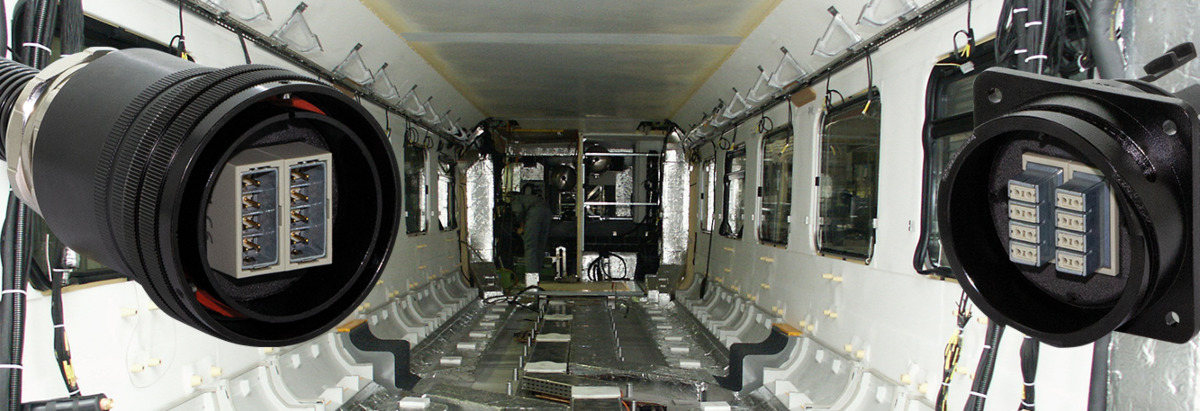
GM-R: Round coupling. Modular connection. Railed-system-compliant protection.
Power, signals, and data via a single interface
Electrical interfaces in modern rail vehicles are increasingly required to perform a variety of tasks. In addition to power supply, control and sensor signals as well as high-performance data connections are needed. At the same time, available installation space is limited, and the connection technology must meet the high demands of rail operations regarding vibration, environmental influences, fire safety, and electromagnetic compatibility.
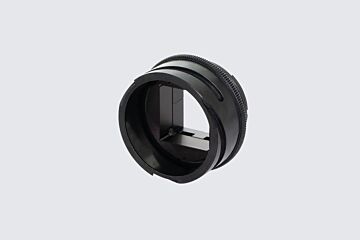
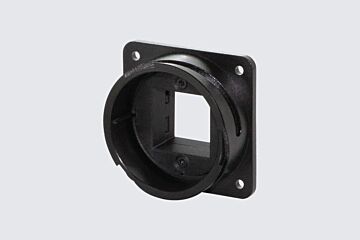
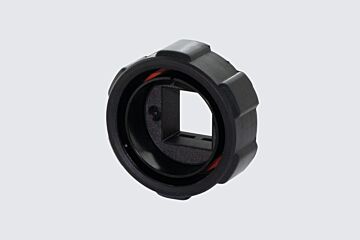
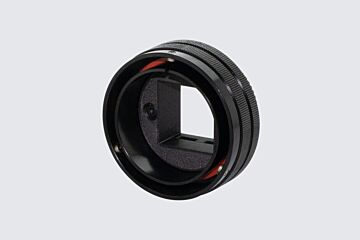
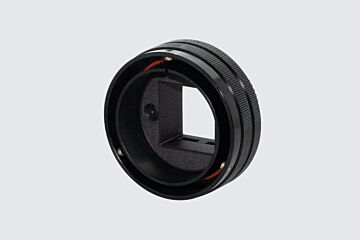
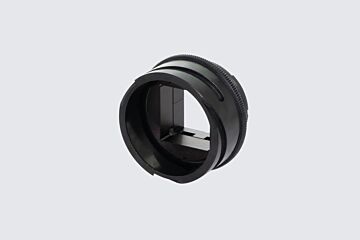
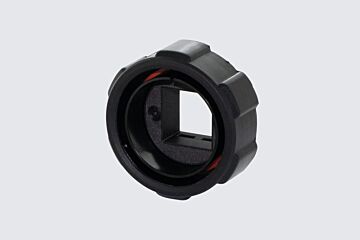
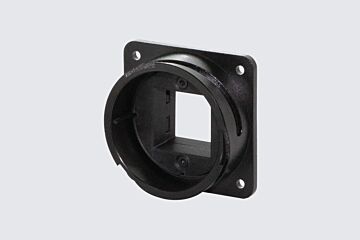
The modular circular connectors of the GM-R series from Gimota were developed to meet these requirements. Their design allows for the combination of different contact modules for power, signals, and data within a single circular connector housing.
This allows interfaces to be specifically adapted to the electrical architecture of a vehicle or subsystem. Instead of using multiple separate connectors for different transmission tasks, various functions can be combined into a single modular interface.
This reduces the number of interfaces and offers design advantages, particularly in confined installation spaces.
Modular connector system for various transmission tasks
At the heart of the GM-R series is the modular contact insert. The contact configuration is not dictated by a fixed pinout but can be configured according to the specific application.
Options include, among others:
- High-current modules up to 200 A
- Power modules for voltages up to 1000 V
- Signal modules with high contact density
- Ethernet modules up to 10 Gbit/s in accordance with CAT 6A
- Q-CoaX modules for shielded data and signal transmission
- Blank modules for filling unused module slots
Power supply, control lines, and data communication can thus be implemented within the same connector.
For designers, this concept offers particular advantages when multiple electrical functions must be routed in a limited space—for example, in control cabinets, at car crossings, or within decentralized control and power supply systems.
At the same time, the interface remains adaptable: if the requirements for a system change, the module configuration can be adjusted accordingly without having to switch to a different connector concept.
Four mechanical coding options to prevent incorrect insertion
In rail vehicles, multiple connectors of the same size are often used in close proximity. Unambiguous mechanical identification of the interfaces is therefore particularly important during installation, commissioning, and maintenance.
Four mechanical coding options are available for the GM-R series. This prevents connectors with different codes from being connected to one another.
This supports:
- the unambiguous identification of interfaces
- protection against incorrect insertion
- safe installation and commissioning
- more efficient maintenance and service work
Coding is therefore not merely a mechanical detail, but part of a comprehensive interface concept. Especially in vehicles with recurring connector positions, it facilitates unambiguous identification and reduces the risk of faulty connections.
Rugged circular connectors for use in rail vehicles
In addition to the electrical configuration, the mechanical design plays a central role in the rail sector. Depending on their installation location, connectors are exposed to vibrations, shock loads, temperature fluctuations, moisture, dust, and other environmental influences.
The GM-R Series is based on the proven design of rugged circular connectors and follows the housing concept specified in MIL-DTL-5015. Housing sizes 36 and 40 are available.
A bayonet lock enables quick connection and disconnection of the interface while ensuring a defined mechanical lock. This is particularly relevant in applications where connectors must be regularly accessible during installation or maintenance work.
Combined with twisted crimp contacts and robust aluminum housings, the system is designed to meet the mechanical requirements of typical rail applications.
Electrical and Mechanical Specifications of the GM-R Series
By combining different contact modules, the GM-R Series covers power and signal transmission as well as modern data communication.
| Feature | Value / Version | Application Benefits |
| Voltage | up to 1000 V, individual modules up to 5000 / 2900 V | For power and high-voltage applications |
| Current | up to 200 A | Suitable for energy-intensive loads |
| Data transmission | up to 10 Gbit/s CAT 6A | For modern Ethernet and communication systems |
| Protection rating | IP69 per IEC 60529 | Protection against dust, water, and high-pressure cleaning |
| Temperature range | typically -40 °C to +125 °C | For indoor and outdoor applications in rail transport |
| Fire protection | EN 45545-2, R22/R23/R24, HL1–HL3 | Meets key requirements of the European rail market |
| EMC | Conductive versions and shield connection possible | For interference-free signal and data transmission |
| Contact Technology | Twisted crimp contacts | Reliable electrical and mechanical connection |
| Contact configuration | Modular | For maximum flexibility in a connector |
| Coding | Four mechanical coding options available | For unambiguous assignment of interfaces and protection against incorrect insertion |
For certain modules, dielectric strength ratings of up to 5,000 V are also available.*
This allows a GM-R interface to handle both traditional power supply and control tasks as well as Ethernet and other shielded data connections within a single connector system.
* The specific electrical design depends on the module used and the respective configuration. The technical data for the corresponding version are authoritative.
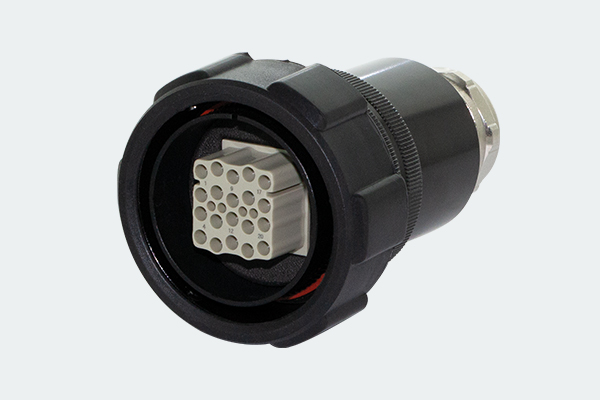
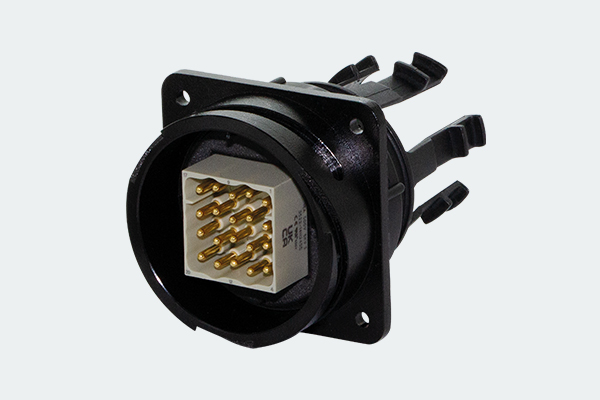
Overview of Typical Module Variants
| Module Type | Number of Contacts | Rating | Typical Application |
| High-Current Module HC | 1-pole | 1000 V / 200 A | Power supply, main loads |
| KC Power Module | 1- or 2-pole | up to 1000 V / 100 A | Medium-power connections |
| K70C Module | 2-pole | 1000 V / 70 A | Compact power supply |
| CC module | 2-, 3-, or 4-pole | up to 1000 V / 40 A | Power and Control |
| EC Module | 2 to 20-pole | up to 5,000 V / 16 A | Signal and voltage applications |
| ZC/DC Modules | 12-, 17-, or 42-pin | up to 250 V / 10 A | Signal technology, control lines |
| SC module | 25-pin | 50 V / 4 A | Compact signal transmission |
| MegaBit/GigaBit modules | 2 x 4 or 4 x 2 | 50 V / 5–10 A | Ethernet, Data Communication |
| Q-CoaX Modules | 4 + shield or 8 + shield | 50 V / 5–10 A | Coaxial cables |
The table illustrates the system concept: GM-R is not a single connector, but a modular system for sophisticated connection solutions.
Railway standards, fire safety, and EMC
Connectors for rail vehicles must do more than just function electrically and mechanically. Materials, housings, contact designs, and shielding concepts must also be tailored to the regulatory requirements of the respective application.
The GM-R series is designed for applications in the rail and transportation sectors and takes into account, among other things, requirements from:
- EN 45545-2 – Fire safety in rail vehicles
- IEC 61373 — Shock and vibration stresses
- IEC 60529 — Degrees of protection provided by enclosures
- RoHS
- REACH
Depending on the design, both conductive and non-conductive housing variants are available. This allows the connector to be adapted to different requirements regarding potential distribution and electromagnetic compatibility.
End-to-end shielding is particularly crucial for Ethernet connections and other high-frequency signals. An EMC-compliant design of the interface helps reduce interference and ensure signal integrity within the overall system.
Modular circular connectors for refit and modernization
The modular architecture offers advantages not only in the development of new rail vehicles. It can also simplify the integration of new electrical functions in refit and modernization projects.
Existing vehicles often already have defined mounting positions and circular housing cutouts. At the same time, modernization projects place increasing demands on data communication, diagnostics, sensor technology, and control systems.
Typical examples include the retrofitting of:
- Ethernet communication
- additional sensors
- diagnostic systems
- new control components
- more powerful electrical loads
A modular circular connector makes it possible to integrate such additional functions within an existing interface concept.
Where existing installation locations can be reused, mechanical adjustments can be minimized. This can reduce the design effort and the vehicle modifications required during a refit.
Especially for vehicle fleets with a long service life, this modularity also offers the opportunity to prepare interfaces for future electrical and communication requirements.
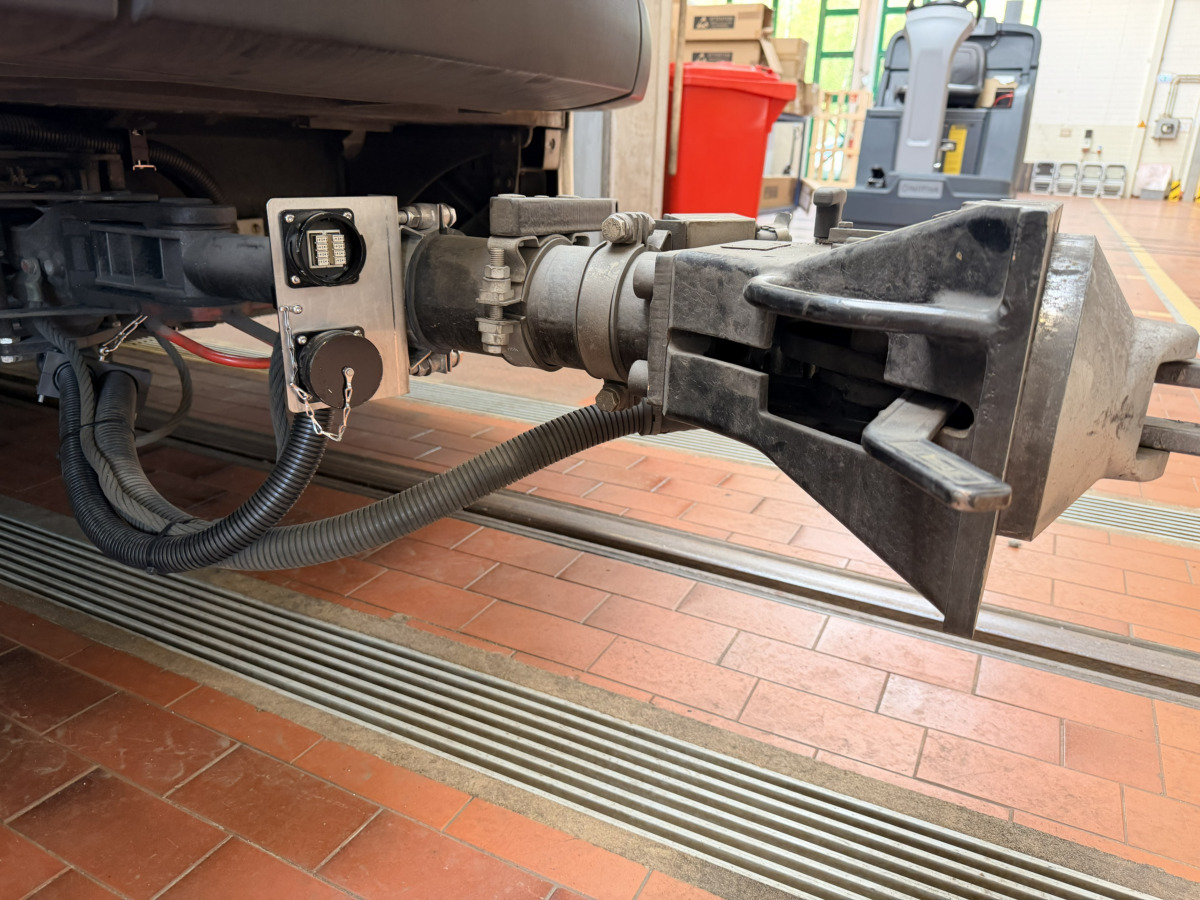
Refurbishment of Combino trams for Erfurter Verkehrsbetriebe AG
Typical Applications of GM-R Circular Connectors
The GM-R series is suitable for applications in which various electrical functions need to be routed through a robust and compact interface.
Relevant Applications
| Application Range | Requirements | GM-R Benefits |
| Vehicle crossing | Motion, vibration, limited space | Robust interlocking, modular layout |
| Control cabinets and electrical distribution panels | Numerous signal and power cables | Combined modules in a single enclosure |
| Air conditioning and ventilation systems | Power, control, outdoor environment | High protection rating, temperature resistance |
| Train control | Signals, data, EMC | Shielded connections, wide variety of contacts |
| Network / Ethernet | Data rates and immunity to interference | Megabit/Gigabit modules up to CAT 6A |
| Motor and power connections | Current-carrying capacity and safety | Modules up to 200 A |
| Safety and diagnostic systems | Signals, Data, EMC | Shielded connections, wide variety of contacts |
| Underfloor applications | Power, control, outdoor environments | High protection rating, temperature resistance |
The modular design is particularly advantageous in applications where power, control, and data have previously been routed via multiple separate connectors, or where available installation space is limited. Thus, the GM-R serves not only as a connection component but also as a building block for robust system integration.
When is a modular circular connector a good choice?
Not every electrical interface requires a modular design. If only identical signal contacts are needed and the interface pinout remains unchanged throughout the entire service life, a conventional circular connector may be the simpler solution.
The GM-R Series really demonstrates its design advantages, especially when different transmission types must be combined within a single interface.
This applies, for example, to applications in which high-current power supply, control contacts, and Ethernet must be routed together to a power unit or between two vehicle compartments.
The modular contact configuration also offers additional flexibility for projects in which future expansions or variants must be taken into account as early as the design phase.
Conclusion: A single interface for various electrical functions
With the GM-R series from Gimota, power, signals, and data can be combined within a modular circular connector. Different contact modules make it possible to design the interface according to the respective vehicle or system architecture.
With current-carrying capacities up to 200 A, operating voltages up to 1,000 V, and Ethernet data rates of up to 10 Gbit/s, protection ratings up to IP69 , and four mechanical coding options, the series covers a wide range of typical requirements in rail and transportation technology.
The key design advantage lies not so much in any single performance feature as in the combination of various functions within a robust interface.
This makes the concept particularly well-suited for rail vehicles and railway systems where installation space, the number of interfaces, mechanical robustness, and future expandability must be considered together as early as the design phase.
Frequently Asked Questions About Modular Circular Connectors (FAQ)
What are modular circular connectors?
Modular circular connectors, such as the GM-R Series, combine a round, robust connector housing with freely configurable inserts. This allows power, signals, and data to be transmitted through a single interface.
Which standards does the GM-R Series meet for railway applications?
The GM-R complies with EN 45545-2 (fire protection, R22/R23/R24, HL1–HL3), EN 61373 (vibration/shock), and IEC 60529 (protection rating up to IP69). Many components are also classified according to UL 94 V0.
What protection rating do GM-R connectors achieve?
When installed, they achieve up to IP69 according to IEC 60529—meaning protection against dust, water, and high-pressure cleaning.
Is GM-R suitable for refit projects?
Yes. Existing round panel cutouts can be reused, while the interior of the enclosure can be configured modularly to meet new power, signal, and data requirements.
When should you choose the conductive version instead of the non-conductive one?
The conductive version (zinc, black passivated, ≤ 0.5 MΩ) is designed for EMC-critical and shielded applications. The non-conductive, painted version, on the other hand, offers greater corrosion resistance.